Heriberto
Roman

Tremaine
Davis
Elvis
Garcia

Merrishel
Richardson

Brian
Carela

cThink is a multi-sensory learning tool that uses a learning assessment and the D.A.B. method — Draw, Act, Build — to help learners simplify technical concepts and retain them through association building. Inspired by real classroom experiences and lessons with his young son Elijah, Software Engineer and technical instructor Heriberto Roman set out to address a common challenge: learners of all ages struggling to process and retain abstract concepts. cThink tackles this challenge by making the learning process visual, auditory, and kinesthetic — accelerating understanding and boosting memory retention.
This structured, multi-sensory approach stimulates the hippocampus — the brain’s memory center — by layering context, active repetition, and engaging modalities like drawing, role-play, and building. Instead of leaning on rote memorization, learners create personalized mental anchors that promote deeper understanding and accelerate the transfer of knowledge into long-term memory.
After working closely with The Knowledge
House’s students and his son Elijah ,
Heriberto Roman an Instructor at The Knowledge House realized an
intresting pattern, a problem that existed
with his code newbies students
and once himself a code newbie.
Problem: being inundated with new difficult technical concepts
and not being able to move them from working memory into long-term memory
.
Heriberto set out to come up with a solution that plagues code newbies across this nation , the proposal to the solution is called cThink
Heriberto introduced the idea of an instructor
centric capstone project to the teacher & learning
team at
The Knowledge House to start building solutions for TKH.
cThink was pitched by Heriberto Roman to the instructor team and accepted as the first instructor capstone project.
cThink team decides to utilize the Scrum agile software development methodology in order to build a proof of concept [MVP] .
Roles are identified within the cThink team and team members join in on the product development sprint and proceeds with its first whiteboarding session.
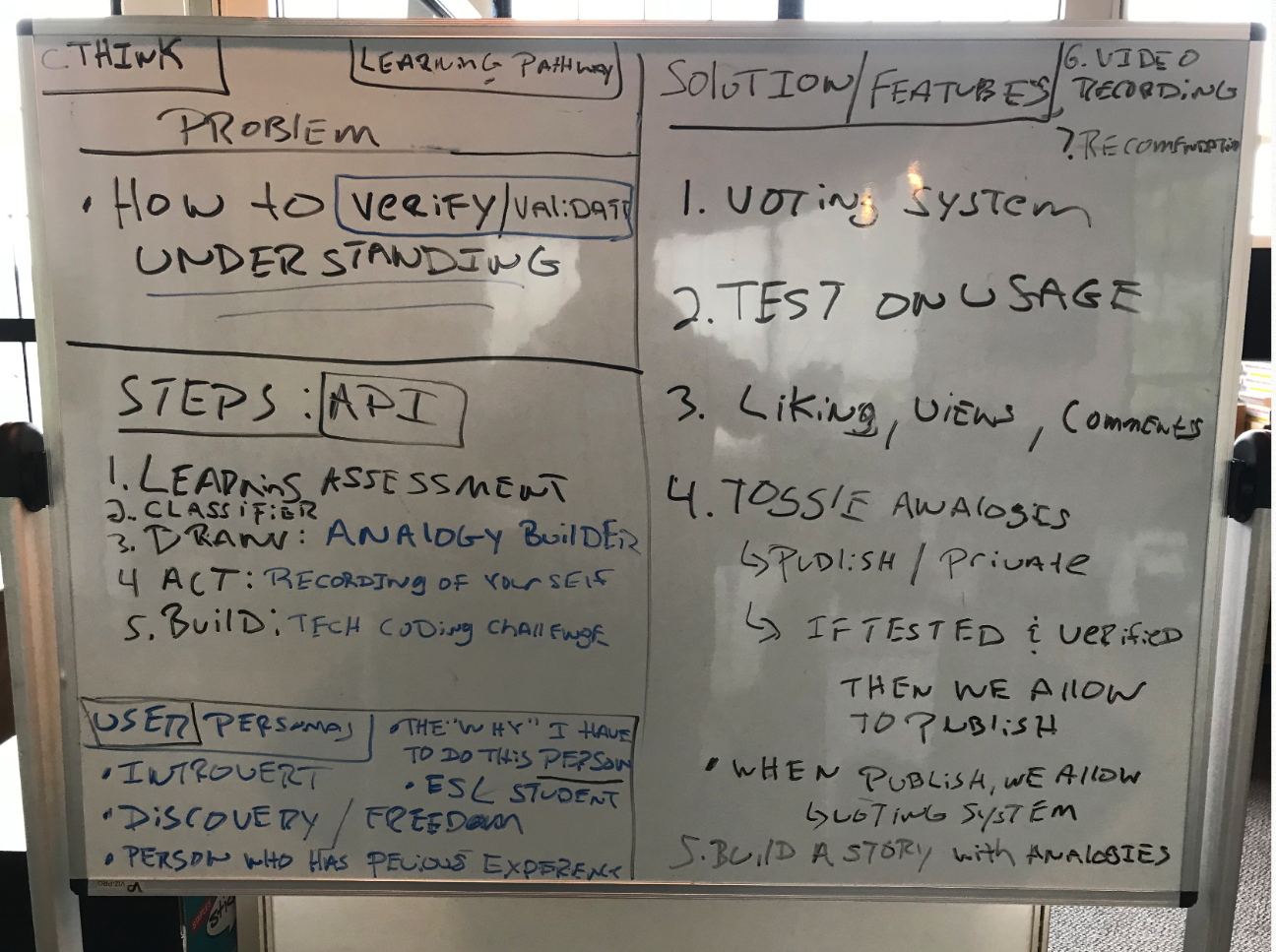
cThink team makes progress within the product development sprint:

Define product
backlog
Define project
roadmap

Create trello
board
Define and create
user personas
Planning poker session for
user story estimations
West Farms bridge to tech cohort is in full swing and Heriberto uses this class as his sandbox to implement and test drive the in-person pedagogy of DRAW. ACT. BUILD. {D.A.B}.
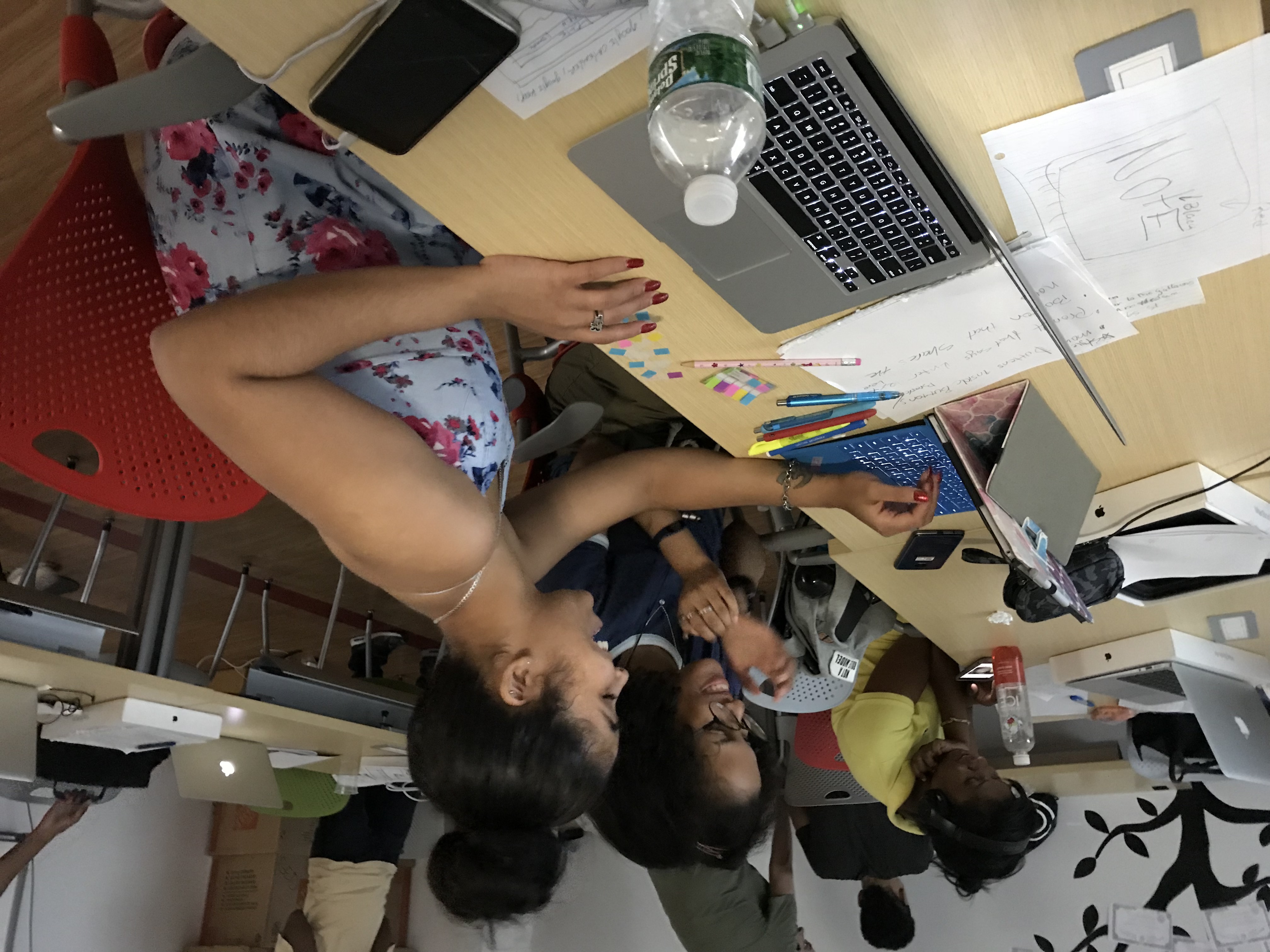
cThink team makes progress within the product development sprint:
Define product
backlog
Define project
roadmap
Create trello
board
Define and create
user personas
Planning Poker for
user story estimations
cThink kicks off the UX/UI sprint #2 and makes progress within the UX/UI sprint.
Create low
fidelity wireframe
UX/UI sprint
demo day
Sprint velocity
for UX/UI sprint
The Verizon 5G EdTech Challenge is a nationwide open call to find innovative, cutting-edge, education technologies that will transform middle school education. cThink successfully applies for the grant
cThink team completes the product backlog:
Define product
backlog
Define project
roadmap
Create trello
board
Define and create
user personas
Planning Poker for
user story estimations
cThink team completes the low fidelity wireframe & UX/UI sprint demo day
Create low
fidelity wireframe
UX/UI sprint
demo day
Sprint velocity
for UX/UI sprint
cThink receives word from the Verizon 5G EdTech Challenge and despite the cThink team-best effort, did not win the grant to fund the project.
Project cThink comes to a hault.
Project cThink becomes a solo team, Heriberto Roman founder of Hroman Codes, LLC and main contributor rekindles the project and starts to define the cThink roadmap.

Heriberto redefines a new, fresh, modern look for CThink from the old logo

to the new one.

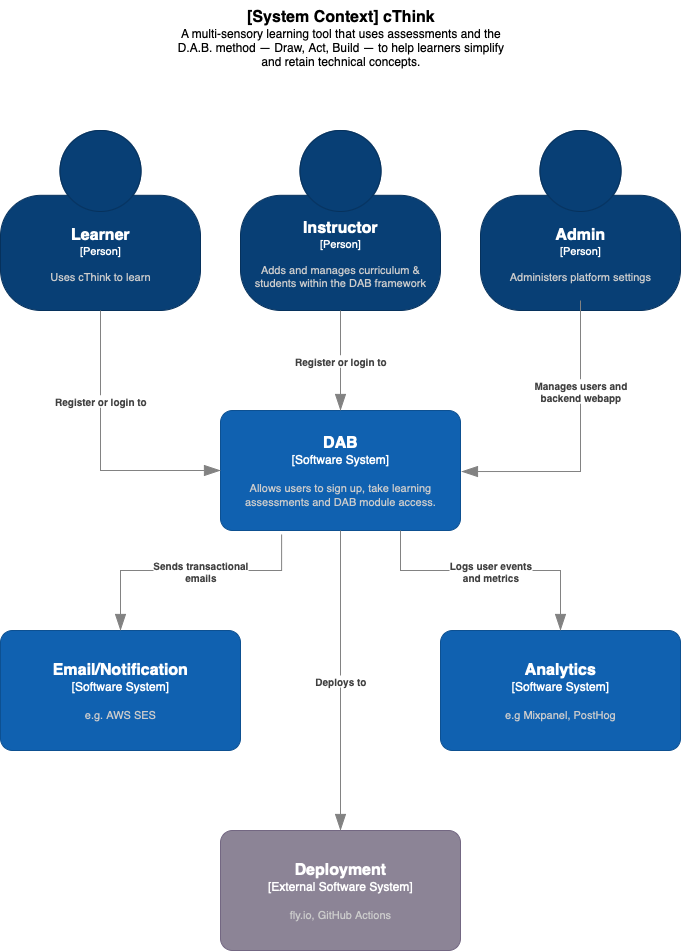
cThink system context diagram is complete.
Next update coming soon!